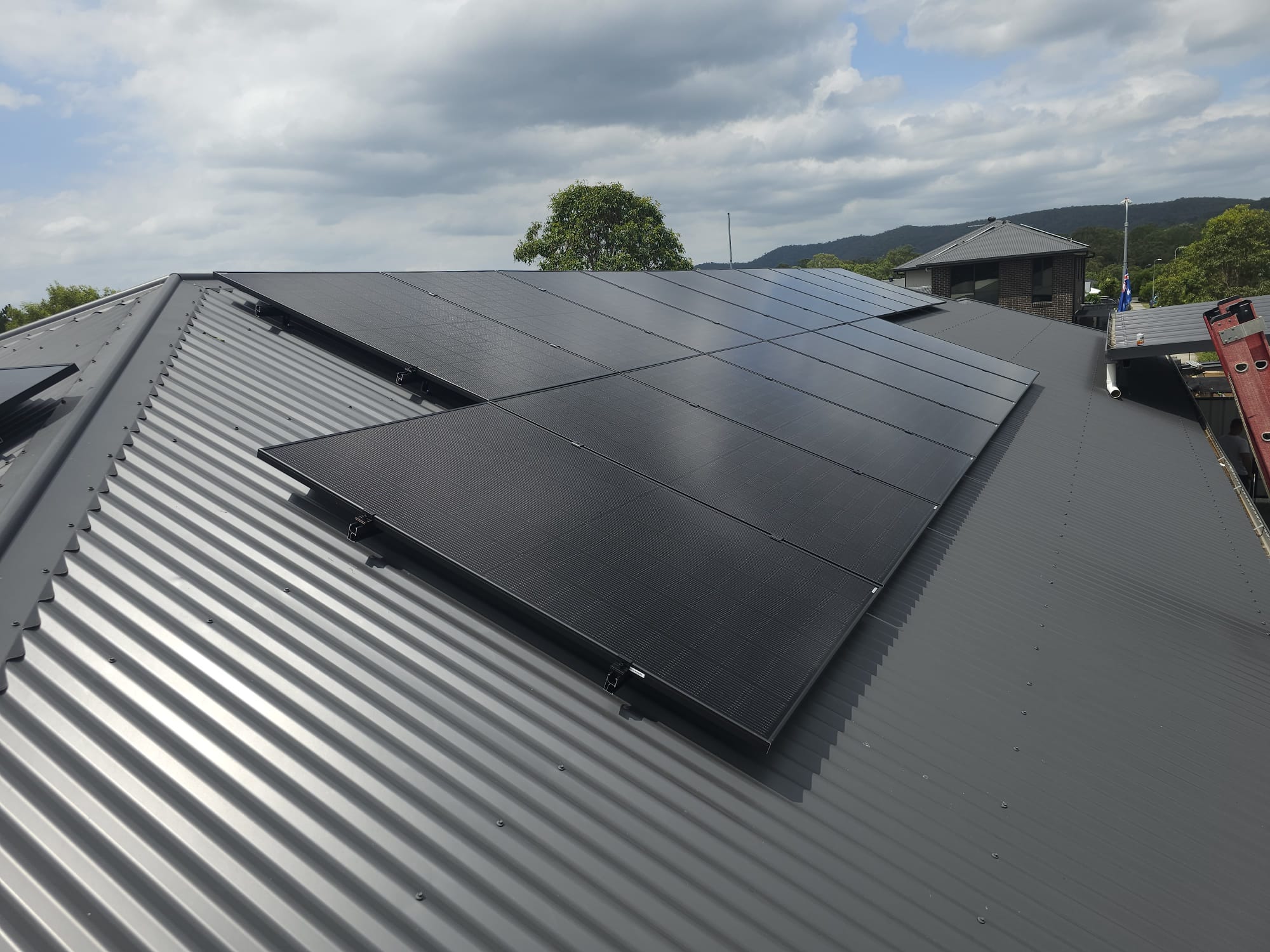
Installing solar panels is one of the best financial decisions a Queensland homeowner can make. But for a significant portion of solar households, the electricity bill reduction is far smaller than expected. Some solar owners are still paying $800 or more per quarter. The reason is consistent and fixable — but it requires understanding how solar generation and household consumption actually interact.
The Solar Generation Window
A rooftop solar system in South East Queensland generates the majority of its energy between roughly 8:30am and 3:30pm. Output peaks around solar noon — typically between 11am and 1pm. By 4pm, generation has dropped significantly on most days. By 5pm, output on a residential system is often negligible.
This generation curve is fixed. It follows the sun. You cannot move it to 6pm, no matter what size system you install.
When Queensland Households Actually Use Power
The peak consumption period for most Queensland households sits between 4pm and 9pm. This is when people arrive home from work, run the air conditioning, cook dinner, use the dishwasher, charge devices, and run the washing machine or dryer. On Energex's time-of-use tariff, this is also when grid electricity costs the most — typically 30c to 33c per kWh depending on your retailer and plan.
The mismatch is structural. Solar generates when households consume the least. Households consume the most when solar has stopped generating. This means a solar-only home is still buying expensive grid electricity every single evening.
What Happens to Excess Solar
When your solar system generates more power than your home is using — which happens readily on weekdays when no one is home — that excess power is exported to the grid. Queensland feed-in tariffs currently range from 1c to 8c per kWh depending on your retailer. The most common rates sit between 4c and 6c per kWh.
Here is the exchange that solar-only homes are making without realising it: exporting solar power at 5c per kWh during the day, then buying grid power at 30c per kWh in the evening. That is a 25c per kWh loss on every unit of energy that follows that cycle. Multiply that across a typical household's evening consumption — say 15 to 20 kWh per day — and the daily loss runs to $3.75 to $5.00. That is up to $1,825 per year in avoidable costs.
Why Bigger Solar Doesn't Solve It
A common response is to install a larger solar system. More panels generate more power, so more is exported. But this does not change the evening consumption problem — it only increases the volume of cheap exports during the day. A 13.2kW system will export more than a 6.6kW system, but it will still generate nothing after 5pm. The evening grid dependency is unchanged.
The correct solution is not more generation. It is storage.
How Battery Storage Closes the Gap
A home battery system charges from excess solar during the day, storing energy that would otherwise be exported at 5c per kWh. From 4pm onwards, the battery discharges automatically — supplying household loads from stored solar rather than the grid. The 30c grid electricity is avoided. The 5c export loss is eliminated. The stored energy is consumed at home at its full value.
A 10kWh battery with 90% usable capacity can supply 9kWh during the peak window. At a 30c retail rate, that delivers $2.70 in avoided grid costs each evening — roughly $985 per year in peak-shift savings alone. In summer, when air conditioning loads are higher and grid prices matter most, a correctly sized battery also qualifies for virtual power plant (VPP) programs that generate additional revenue from grid stability services.
Getting the Battery Sized to Your Evening Load
The amount of battery capacity needed varies significantly between households. A family of four running ducted air conditioning has different evening energy needs than a couple with a modest split-system unit. Undersizing the battery leaves part of the evening window uncovered; oversizing wastes capital on unused capacity.
Source Energy Group reviews your actual interval consumption data — not averages or estimates — before recommending a system. We identify your evening consumption profile, establish the battery capacity required to cover that specific window, and select a system that matches your actual load rather than a standard package.
If you have solar panels but your bills are still high, the problem is almost certainly your evening consumption pattern. A free energy audit with Source Energy Group will show you exactly what a battery system would change on your specific bill.
Get a Free Quote