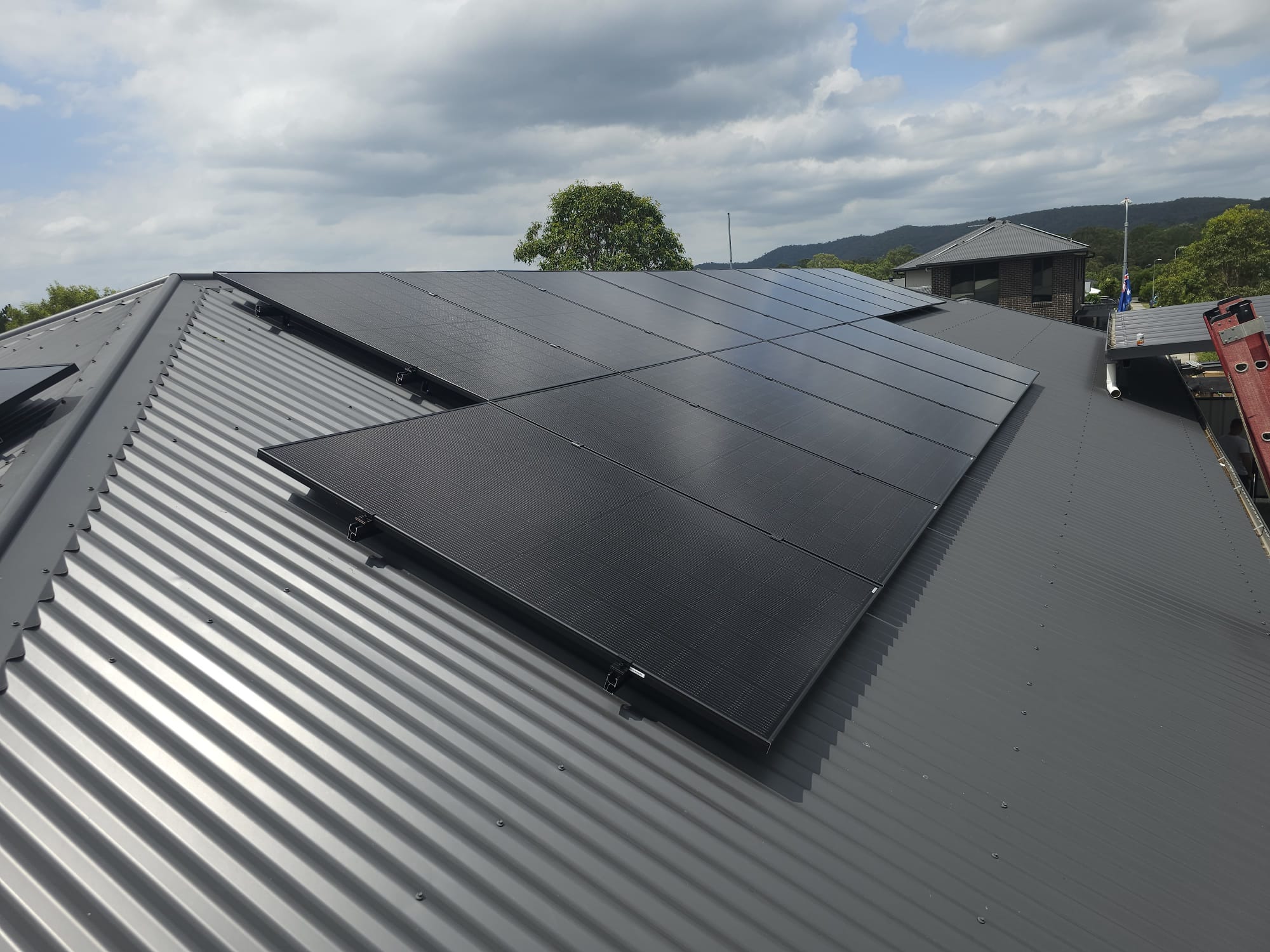
Adding battery storage to a Brisbane home — whether as a new installation alongside solar or as a retrofit to an existing solar system — is a more involved process than a standard solar install. Understanding each step before you proceed helps you evaluate installer quotes accurately and set realistic expectations for timeline and disruption to your household.
Types of Battery Installations
There are two distinct installation scenarios for Brisbane homeowners. The first is a simultaneous solar-plus-battery installation, where the solar panels, inverter, and battery are all installed as a single project. The second is a battery retrofit — adding a battery to an existing solar system that was installed without one. The process differs somewhat between these two scenarios.
For a simultaneous installation, the solar and battery components are designed and installed as an integrated system. The inverter is typically a hybrid inverter capable of managing both solar input and battery charge/discharge simultaneously. The complete system is commissioned as a single unit at the end of the installation day.
For a battery retrofit, the existing solar system must first be assessed for compatibility. Some older inverters cannot be paired with a battery and must be replaced. Others can be retained with an AC-coupled battery system where the battery has its own inverter and operates independently from the solar inverter. The retrofit assessment determines the right approach.
Pre-Installation Requirements
Before a battery installation proceeds, several pre-installation steps are required. A site assessment establishes the correct battery location — typically in a garage, on an exterior wall, or in a dedicated equipment space. Batteries must be installed away from direct heat sources, in a location with adequate ventilation, and where they are not accessible to unsupervised children.
The electrical switchboard must be assessed for compatibility. Some older Brisbane homes have switchboards that are not suitable for the additional circuits a battery installation requires, and a switchboard upgrade may be necessary. Your installer should identify this requirement during the site assessment — not as a surprise on installation day.
Network notification is required for all battery installations in Queensland. Energex (SEQ) and Ergon (regional) must be notified before a battery is connected to the grid. This is handled by the licensed installer as part of the installation process. For most standard residential installations, this does not require a separate approval — notification is sufficient.
The Installation Day Process
A standard residential battery installation in Brisbane takes two to four hours for an experienced team. The sequence involves mounting the battery unit, running conduit and cables from the battery to the switchboard, installing the additional circuits and isolators required, configuring the battery's management system, testing the system under load, and commissioning the monitoring portal.
Power will be interrupted to the house for a period during switchboard work — typically 30 to 60 minutes. Your installer should advise you of this in advance and coordinate timing to minimise disruption.
Post-Installation Commissioning
Once the battery is installed, it must be commissioned — configured to work correctly with your solar system, your household load, and any VPP program you are enrolling in. This includes setting charge and discharge schedules appropriate for your tariff structure, configuring the monitoring application, and verifying that the system is operating as designed under real load conditions.
Source Energy Group's commissioning process includes a walkthrough with the homeowner explaining how to read the monitoring data, how to interpret system behaviour, and who to contact if something appears abnormal. We set up the monitoring portal on your device before we leave.
Ongoing Monitoring and Support
Modern battery systems provide real-time monitoring data accessible via a smartphone app. Key metrics to watch include daily battery cycling (charge and discharge pattern), solar self-consumption rate, and grid import during peak periods. Significant changes to these patterns — without an obvious explanation such as new appliances or changed household habits — warrant a call to your installer.
Source Energy Group maintains an active support relationship with every Brisbane battery installation we complete. If your monitoring data shows anomalies, we investigate. Battery warranties are typically 10 years; our support relationship extends for the working life of the system.
A battery installation is a two-to-four hour process when done correctly. Source Energy Group handles everything from pre-installation site assessment to network notification and system commissioning. Book a free energy audit to understand what a battery installation would involve for your specific home.
Get a Free Quote